
Imbolc Part One: A Field Guide
How to reclaim a holiday in the middle of winter.
Preface One: this piece is slightly different than my usual essays. If you care about fighting the loneliness epidemic with art, care, and co-creation, read on. If you’re here for partnerships, design ops, or product marketing, feel free to skip.
Preface Two: if anyone has recommendations for platforms other than Substack, lmk!
The United States—now nearly 250 years old—moves through overlapping crises with arguably few shared rituals to metabolize them. As the system freefalls, funding contracts. Culture loops on nostalgia. Attention fragments under algorithms and optics. When loneliness meets political theater and permanent crisis, nihilism seeps into institutions and everyday life.
Where is the alternative? In the arts, we’ve yet to really define what keeps us moving through the 2020s. (Without language, connection withers; when everything blurs, nothing’s in focus.) What art builds beyond the one-off and holds us through uncertainty?
My career has largely been funding, platforming, and writing about artists and the creative economy. My artistic practice, however, studies systems in decline, because understanding collapse reveals the tools needed to rebuild something more durable and equitable. That study has been shaped by thinkers like Grace Lee Boggs, Robin Wall Kimmerer, David Graeber, Hito Steyerl, Joan Didion, Alistair Moffat, and Andreas Malm—writers who refuse despair, question power, and ask what can be restored, reimagined, or remade.
In recent years, that “something” has taken the form of Imbolc: an ancient Celtic holiday that marks the first signs of spring in the gray of winter. (More on its roots here.)
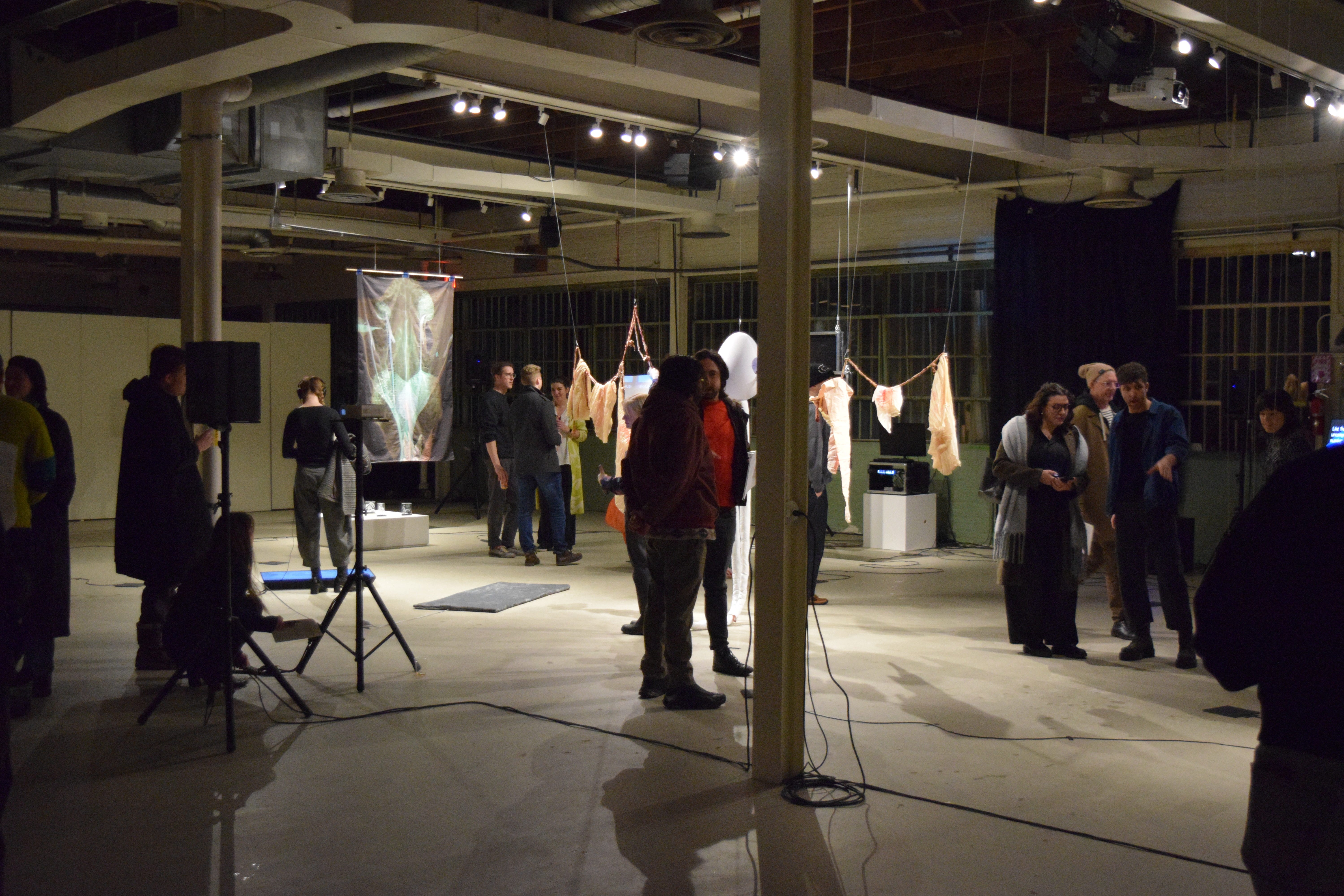
What began in 2023 in Detroit as a one-night gathering of close friends around food and music just concluded its 2026 edition across five days, six venues, fifteen events, 75 artists, 1,400 participants, and roughly $40,000 distributed across the creative economy. The inertia to gather—and then gather again, and again, and again—is stronger than the inertia to isolate.
This piece (across parts) will unpack:
How Imbolc scaled in four years (and how you might start your own), and
Why ritual art feels particularly resonant right now.
As Byung-Chul Han writes, ritual is to time what homemaking is to space. Let’s learn how to make a home out of time.
How to Start a Winter Ritual; or, an Imbolc Field Guide
In 2023, Imbolc was a two-day gathering in my house with 8 artists and 50 attendees. In 2026, it unfolded across 5 days, 6 venues, 15 events, 75 artists, 1,400 participants, and distributed roughly $40,000 into the creative economy.
It did not scale because we moved fast. It scaled because we repeated carefully.
If you want to start your own ritual-based gathering—winter or otherwise—this is what four years taught me.
1. Start Smaller Than You Think You Should
Year one can be as simple as one core event at one location with artists, friends, and neighbors you already trust at a space you own or understand deeply. The goal of year one is not reach—it’s about building familiarity and trust with the holiday.
I don’t recommend starting with a multi-venue weekend, a grant-dependent budget, a formal board, or a large public launch. You’ll either burn out by year three or collapse under the weight of what you began. We’re building atmosphere, narrative, and storytelling, not infrastructure.
2. Anchor to the Season
Imbolc works because it happens at the coldest, loneliest point of the year. As intimately known by my Celtic ancestors, seasonal anchoring does three things:
It gives emotional relevance: coming together makes you feel good.
It creates natural recurrence: knowing you’ll come together makes you want to do it again.
It reduces marketing pressure: people expect it at the same time, over and over.
Picking a time that matters (geographically, emotionally, culturally) and repeating it every year builds memory. And memory builds momentum.
3. Define the Frame, Not the Event
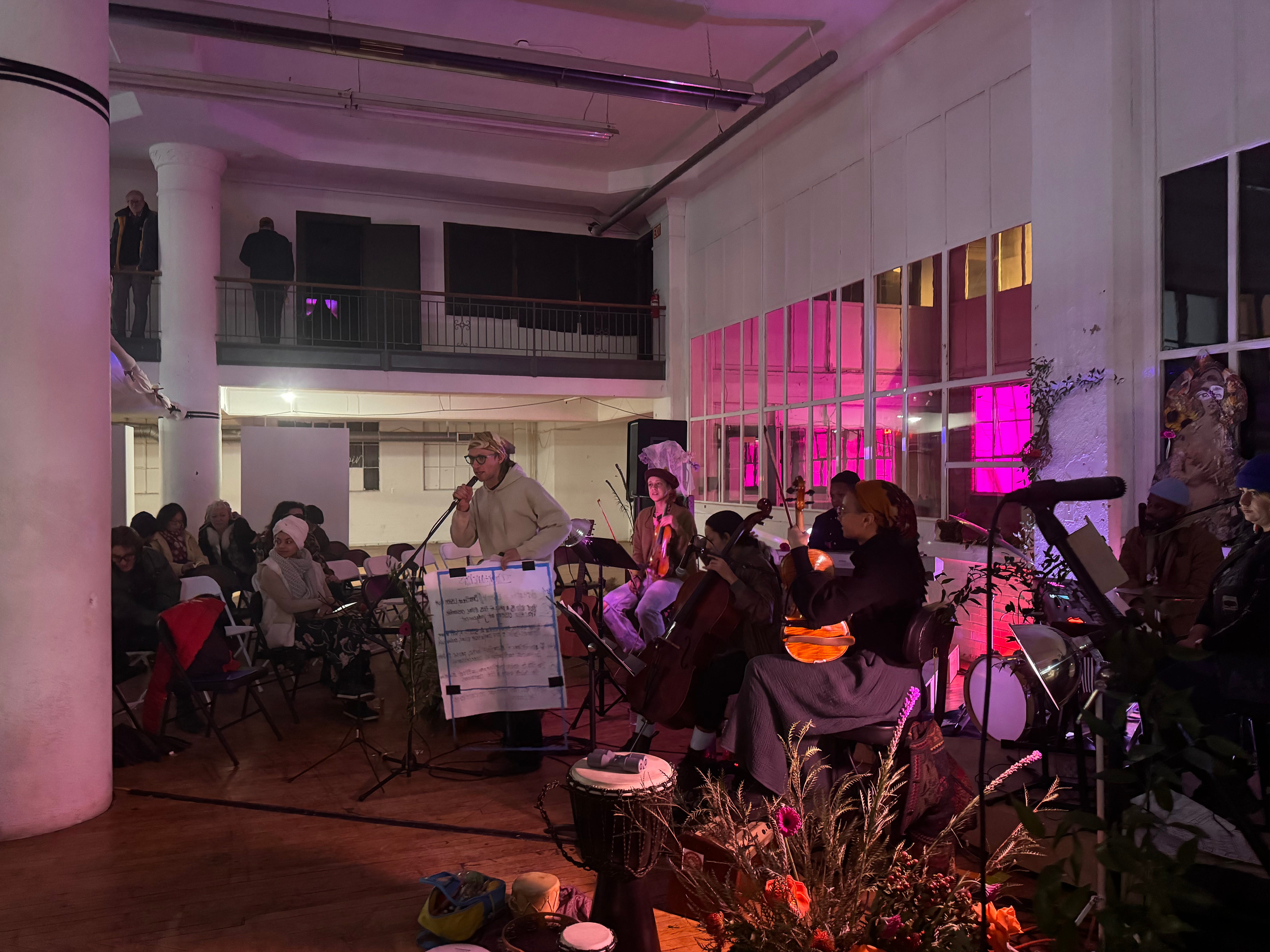
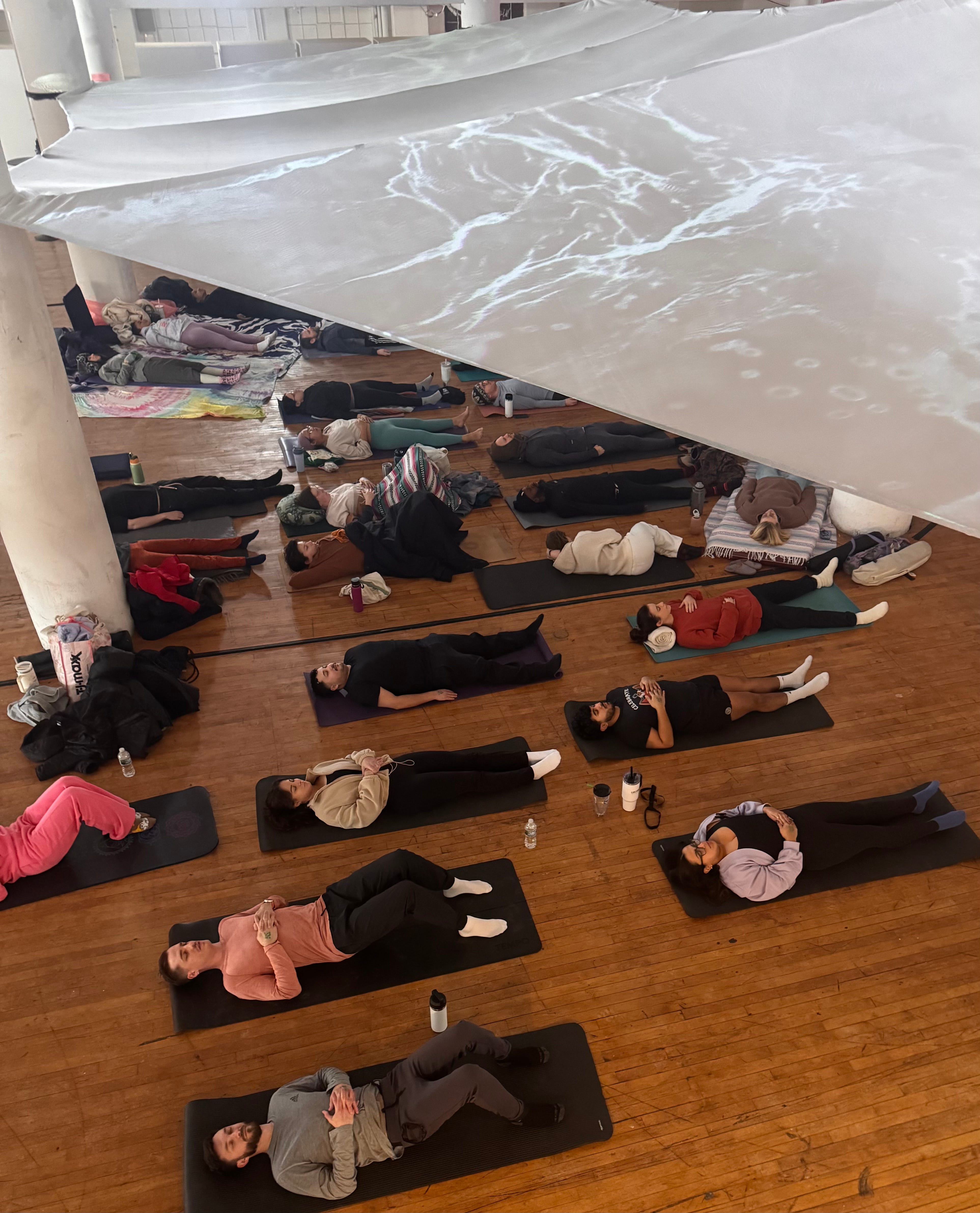
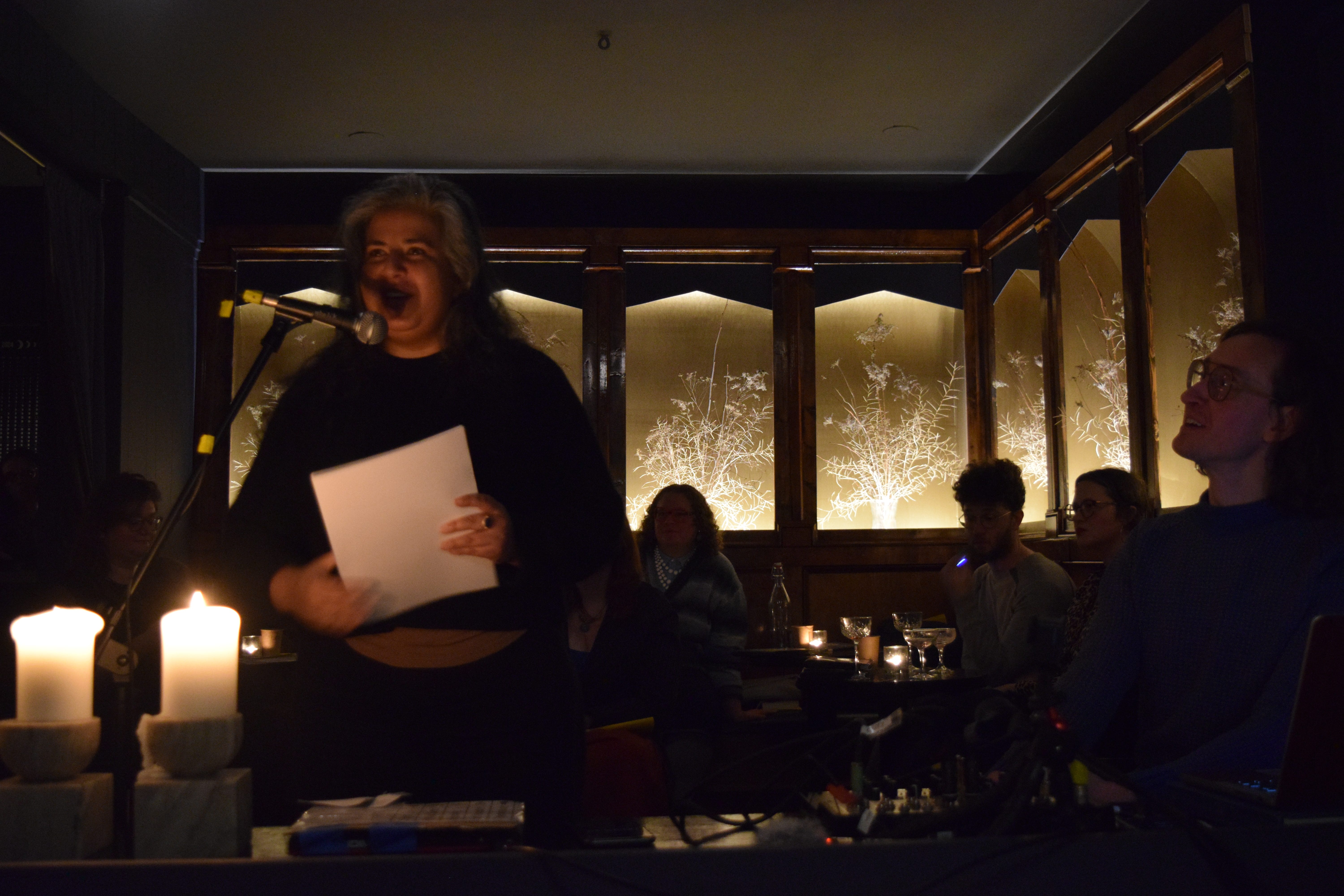
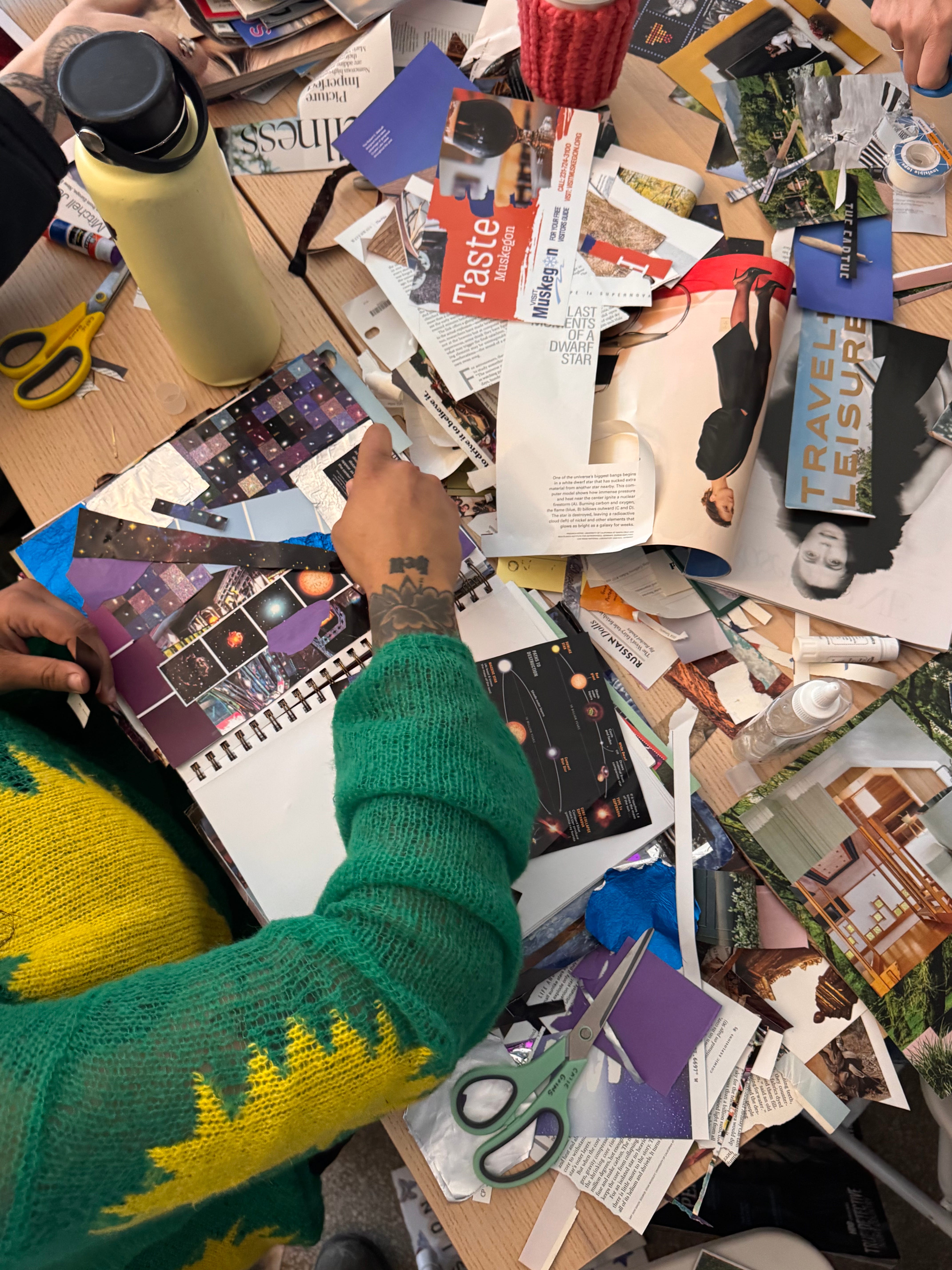
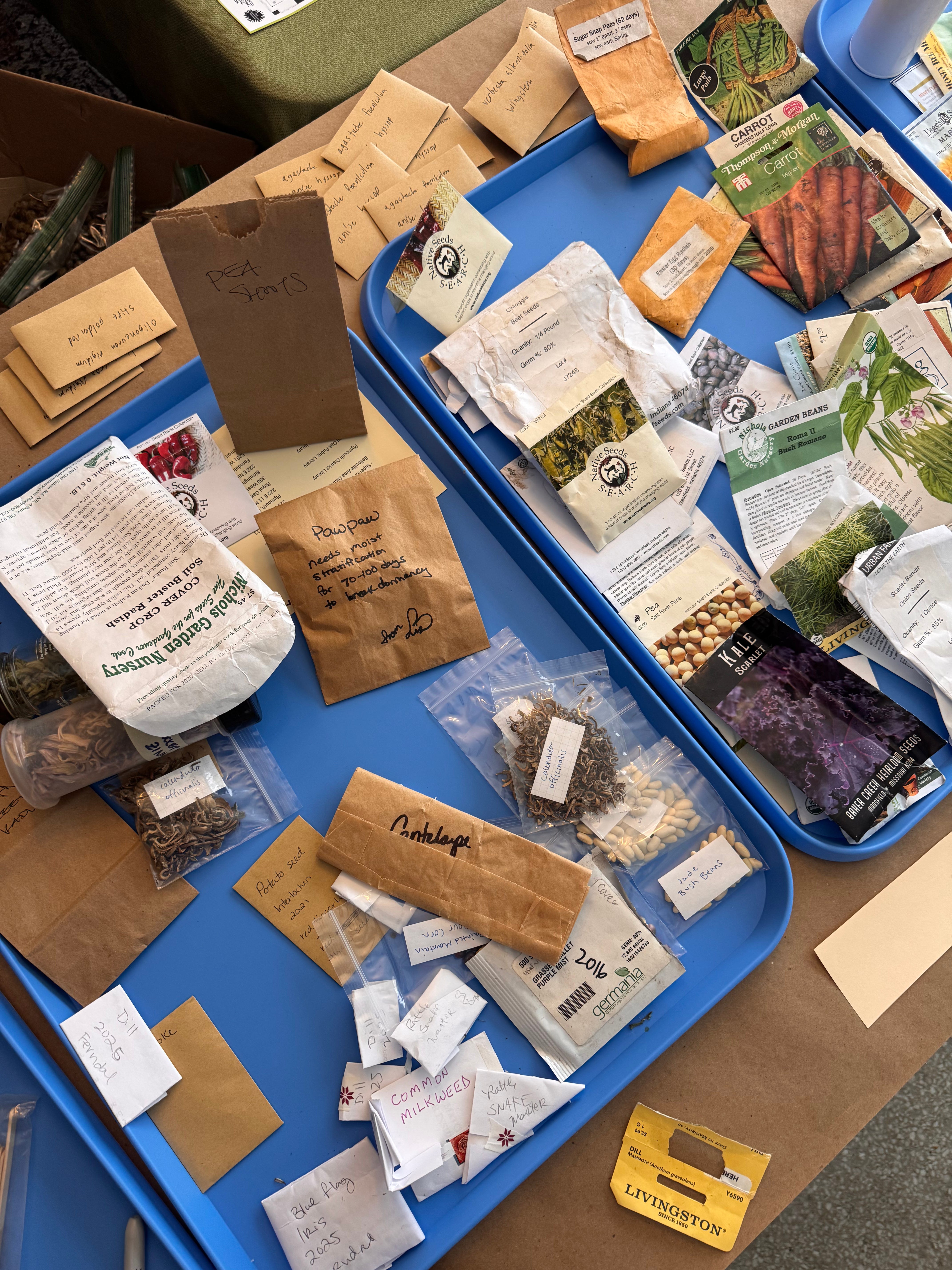
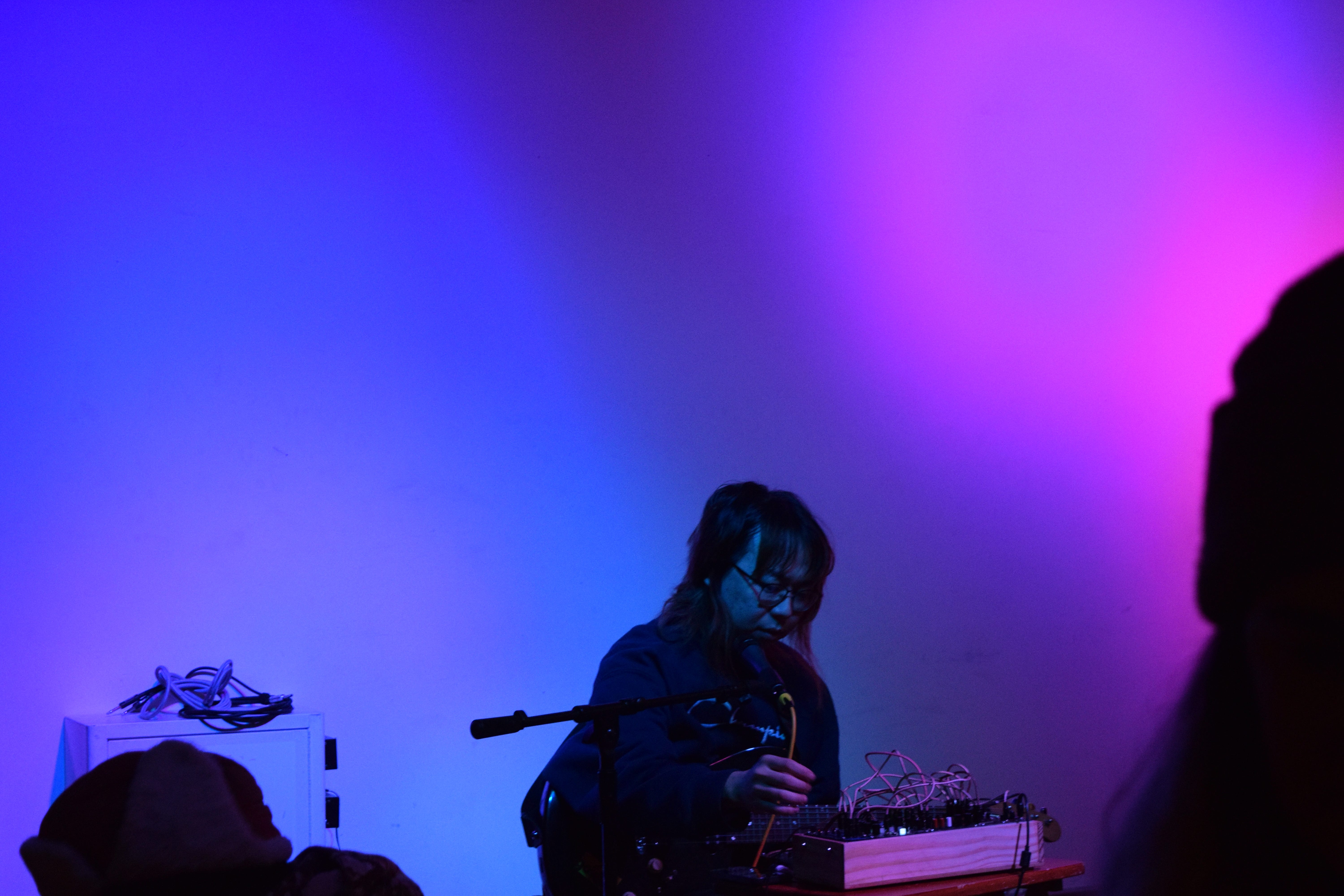
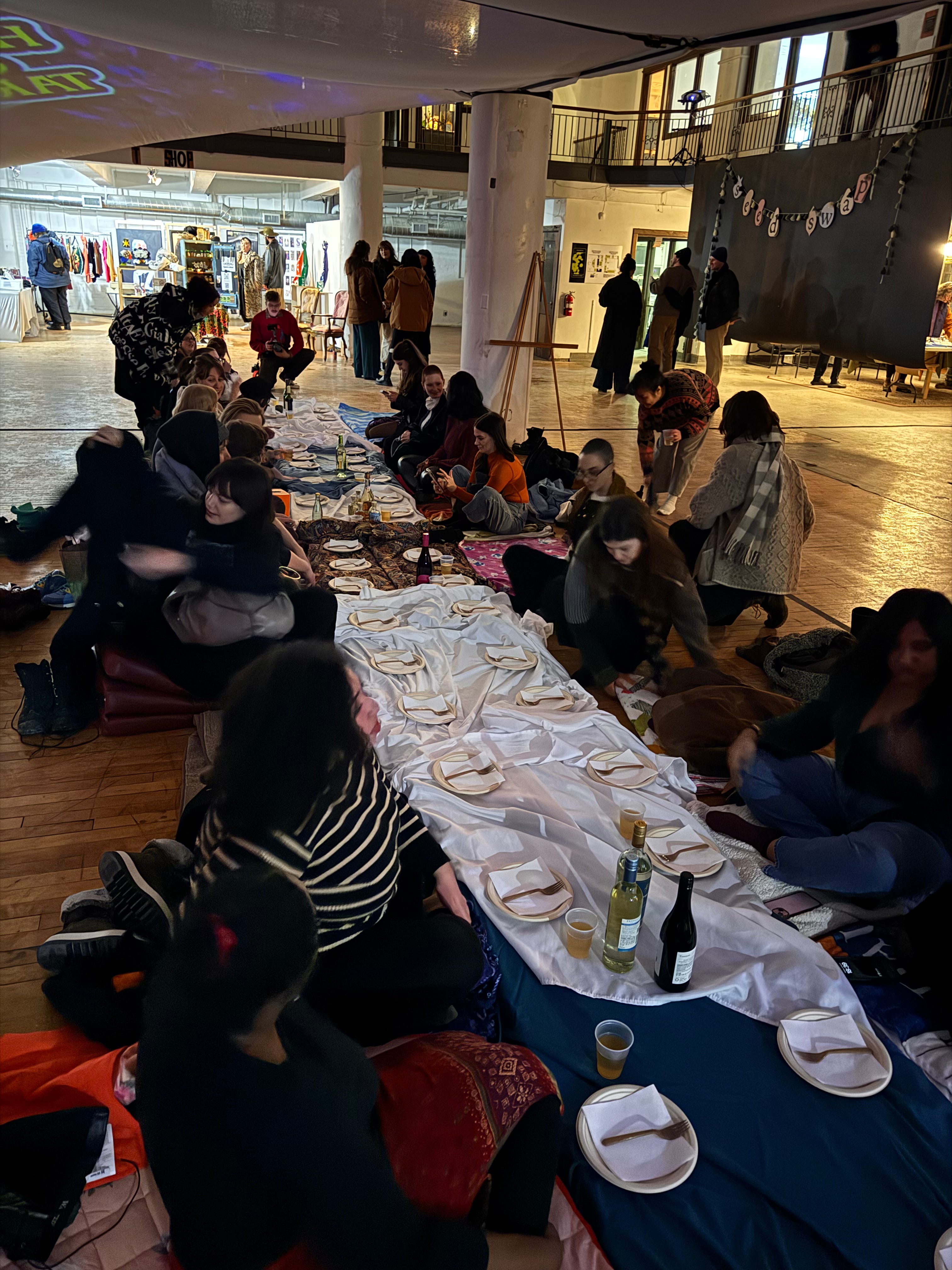
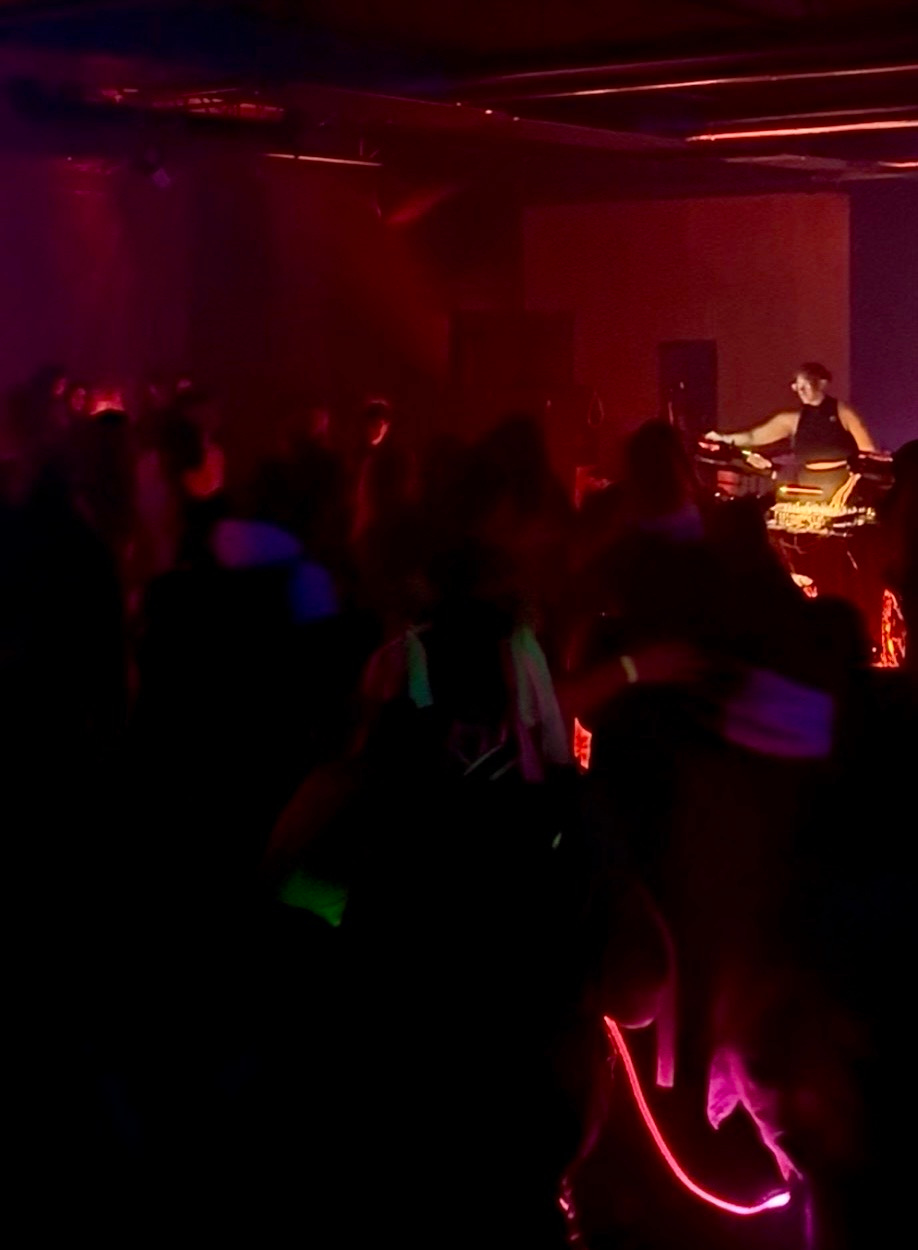
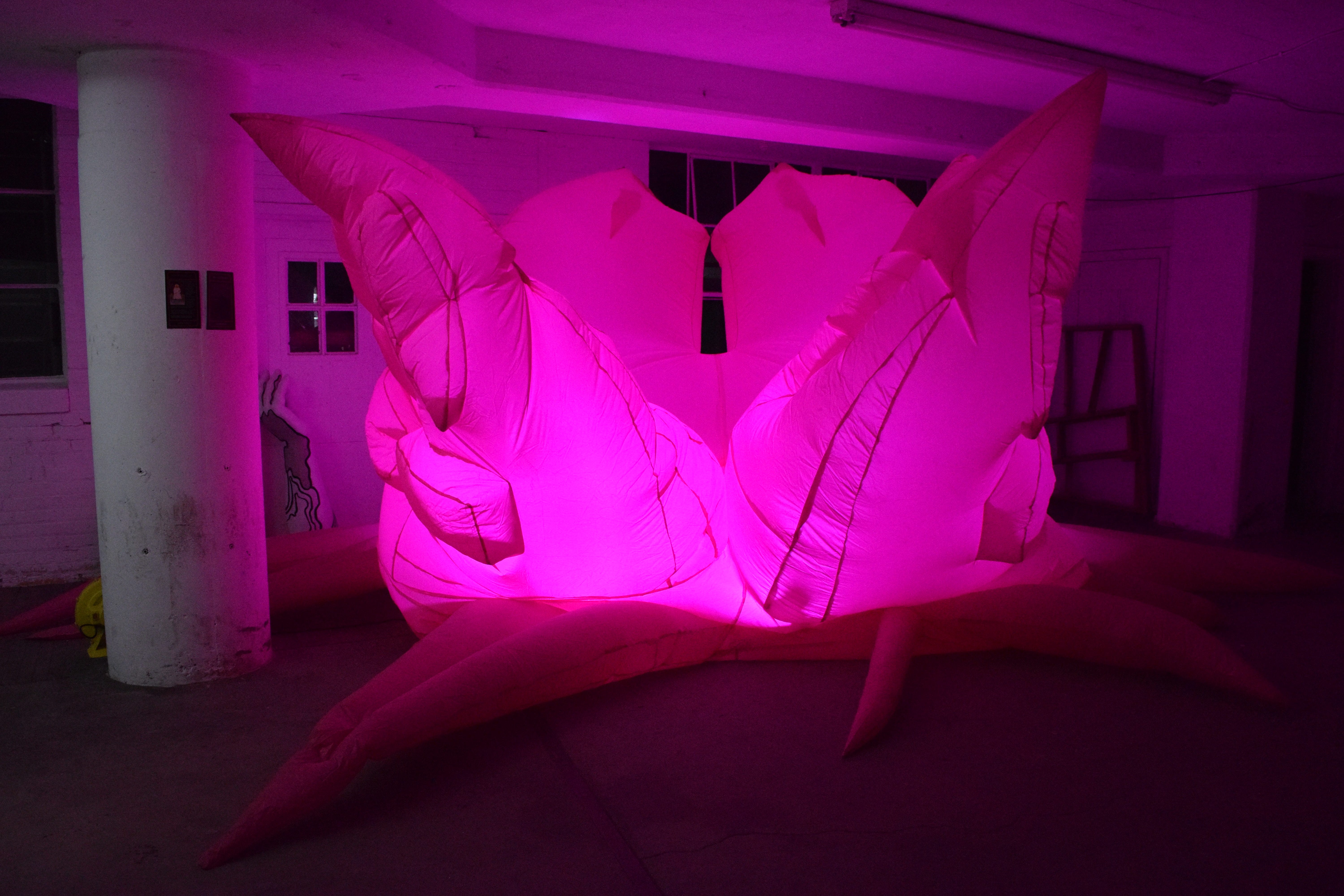
Imbolc is not one type of program, project, or event. Across four years, we’ve done poetry readings, gardening seed swaps, Puerto Rican spring dinners, spatial audio installations, breathwork exercises, graphic scores, techno parties, all-ages community collage sessions, supper clubs, art installations, reading rooms, and more.
What connects them is not format—it’s frame. Anchoring a series of events in a seasonal story, shared values (care, co-creation, generosity, slowness, etc.), and a time window avoids approaching the holiday like a strict program. Plus, in my own research, Imbolc has been celebrated in many, many ways. Why treat it like a rulebook when we can treat it like an invitation?
4. Organic Growth Measured in Years
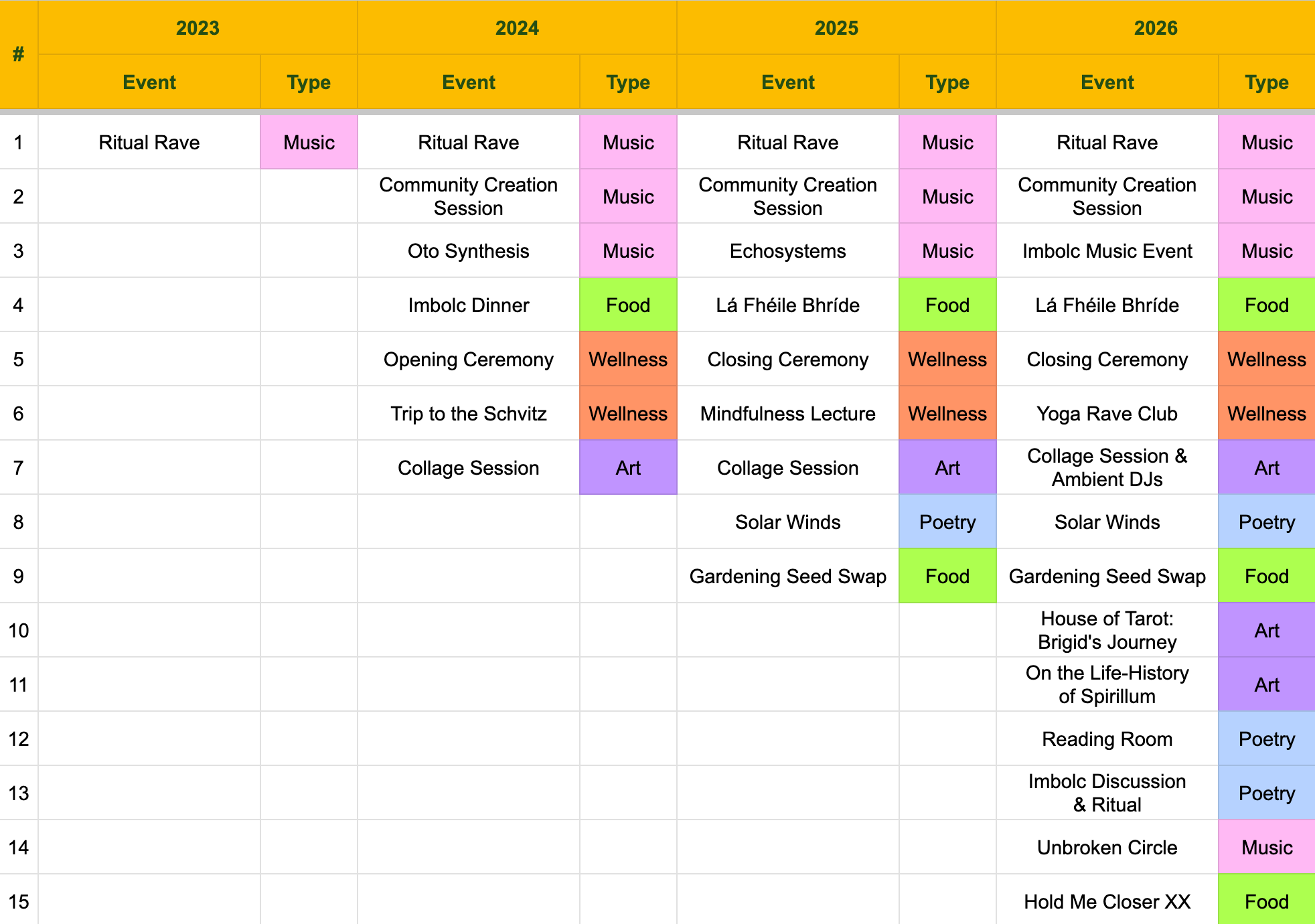
Here’s how Imbolc grew each year in Detroit:
2023 — 1 day, 1 event, 8 artists, 50 attendees
2024 — 4 days, 7 events, 15 artists, 250 attendees
2025 — 5 days, 9 events, 27 artists, 675 attendees
2026 — 5 days, 15 events, 75+ artists, 1,400 attendees
The jump did not come from making one event bigger. It came from organizers discovering Imbolc one year, then becoming an organizer the next. They’d then often rinse and repeat their events each year.
Most of my work as a lead organizer was spent helping the new batch of organizers and simply checking in on previous ones. That way my workload didn’t totally balloon. In other words, the most distilled roles and responsibilities looked like:
Lead Organizer (me): pitch and work with Event Leads
Event Leads: curate, hire, and work with Artists
Artists: make work that responds to the Event Leads’ idea and the holiday for Participants
Participants: come, join, support—and maybe plan something for next year ;)
Tip! If an event lead comes to you with a question, ask them what they think is the right answer before jumping to solve it for them. (They usually are closer to the right answer than you are anyway!) If everything routes through you, the project caps out at your capacity. The more event organizers can self-sustain, it will grow.
5. Fund What You Can, then Pay People Early
Across four years, my event partners and I have:
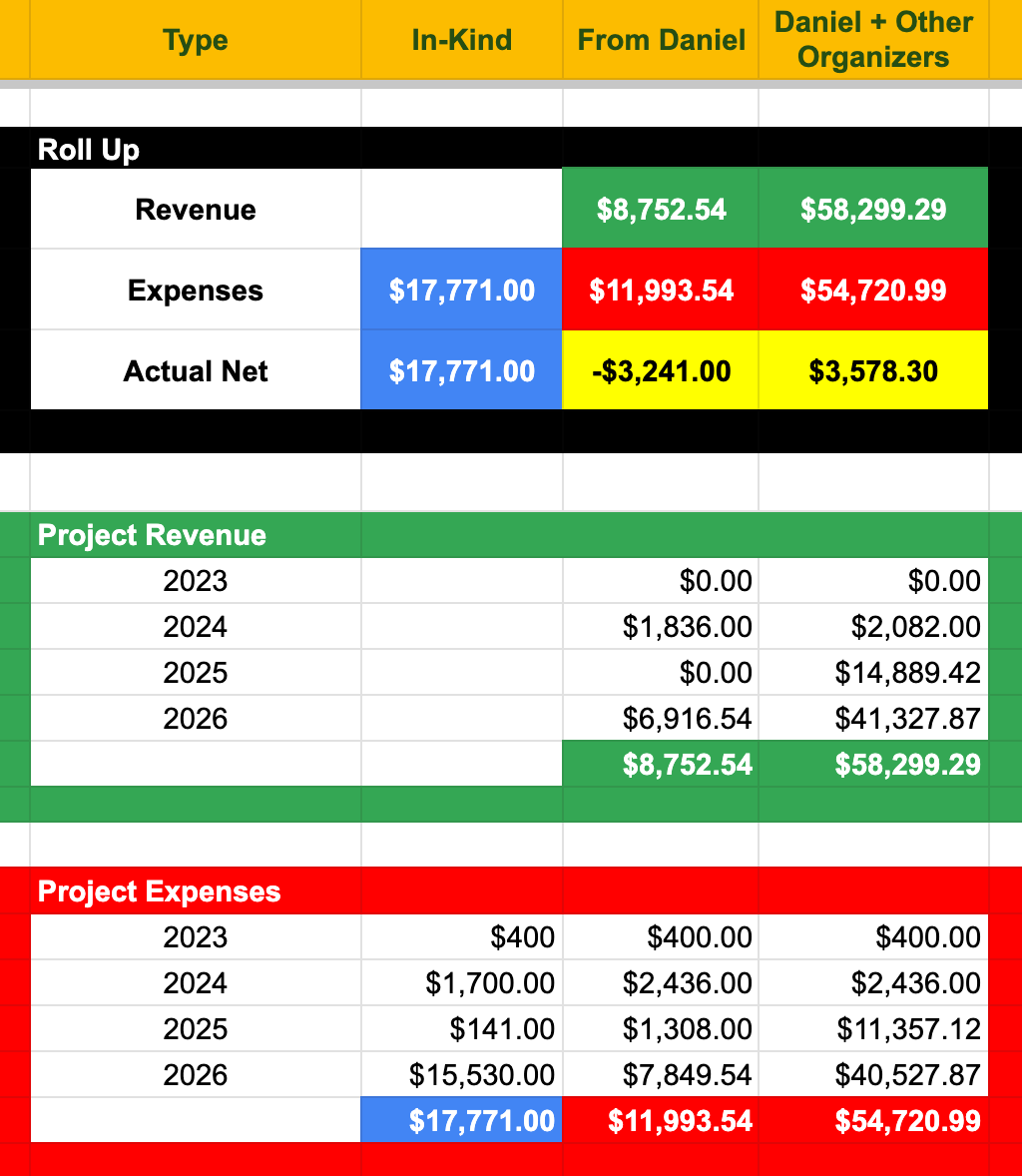
Raised ~$58,000 in total revenue across organizers
Covered ~$54,000 in ecosystem costs
Distributed $40,000+ in 2026 alone
Tracked $17,771 in In-Kind donations—be it labor, space, press, poster designs, website edits, and more.
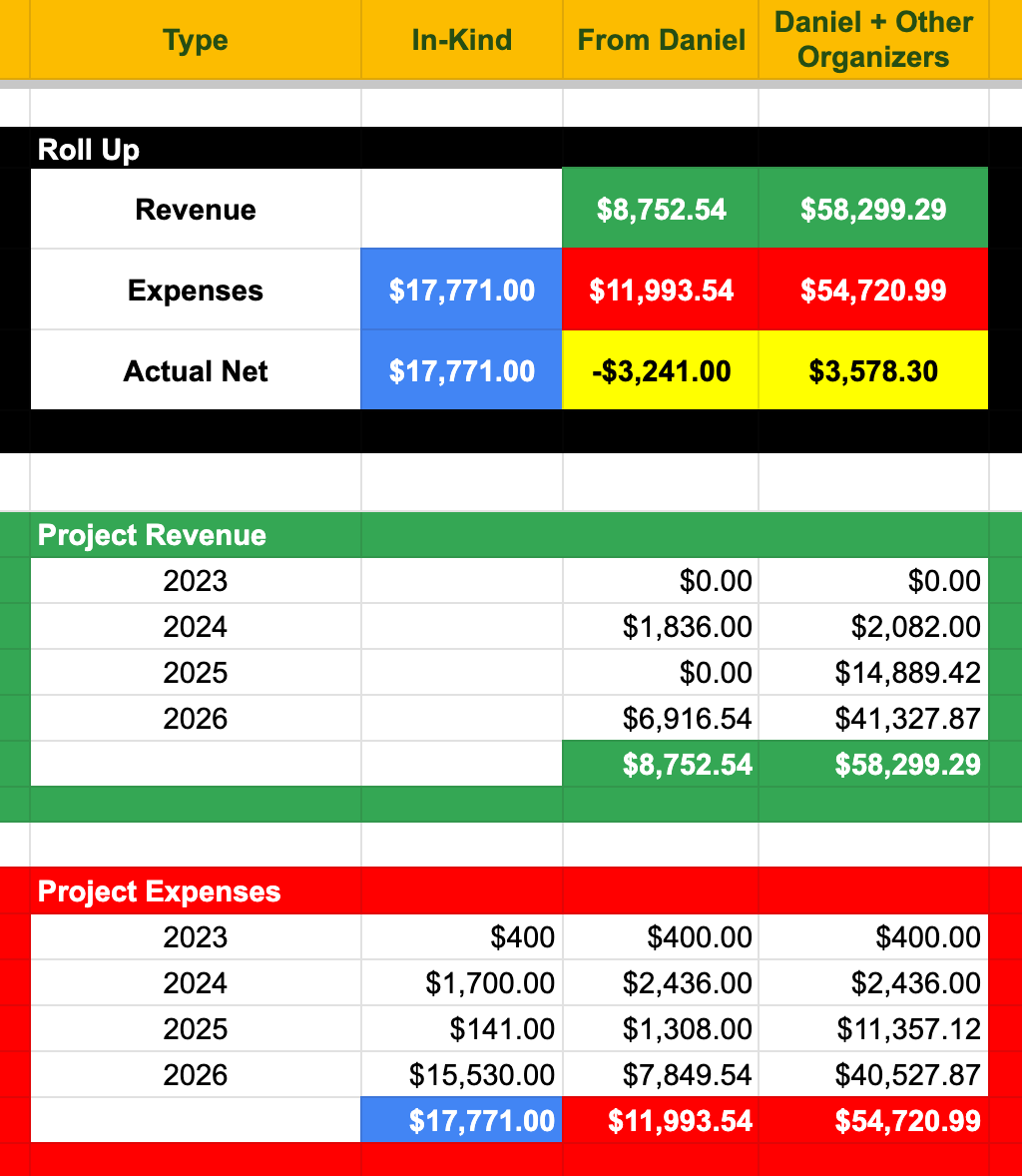
More than half of my own funds each year came from writing pitch decks and cultivating individual donors to give anywhere from $100-$500. Additional funds came from donations at the door and selling prints of my own work, especially when grant applications fell through. Some years I break even; others I frame as “investments” in the creative ecosystem, becoming a funder myself in order to see the project flourish.
This money did not create profit margin for myself (though it generated many for other organizers)—but it did magnify our impact. Remember: my goal has been to reclaim a holiday, not build a revenue-generating machine.
Some events like to be volunteer-organized and free; others like to have their own budgets and sell tickets; others need a $500 microgrant from a donor. If every artist had to follow the same path, the ritual wouldn’t last. That’s why I try to bare minimum offer a $100 stipend for artists and $250 for organizers to signal seriousness, especially when it’s paid in advance. They can then decide to take it, invest it back into their project, or decline and follow a volunteer model. That real conversation and real trust pays future dividends, over and over.
If you’d like a more thorough unpacking of budgets and fundraising, let me know.
6. Choose Spaces Strategically
The hardest part of Imbolc wasn’t programming. I let event organizers design their own interpretation of the holiday, booking their own talent, artists, or whomever they thought would be a great addition to their event. (They also know their world better than I do!)
The hardest part across four years was venues. When you work with spaces that already trust you, already host complex cultural events, have predictable policies, and are run by people who show up to the events—Imbolc is a breeze. When they don’t, expect multiple rounds of rate negotiations, insurance requirements, noise constraints, policy protocols, last-minute rule shifts, and load-in complications.
Imbolc is in the dead of winter. Ease is the goal. Choose the path of least resistance.
7. Keep the Structure Light (Until It Absolutely Has to Be Heavy)
I run Imbolc off of repeated budget spreadsheets, building contracts, site visits, one website, event posters, an Instagram, and a big press release sent to writers at the top of January that outlines every event and artist.
It has, to date, no nonprofit status or complex institutional bureaucracy. That might be why I’ve been denied every single grant for Imbolc I’ve applied to, but it did mean we could lean on a dozen or so individual donors to offset yearly costs and experiment quickly.
If you want to try Imbolc over a few years without a nonprofit system, ensure you:
Over communicate (answer everyone within two days; make an event organizer group chat; set monthly meetings for check-ins and resource sharing).
Under promise (pitch people on the fence on 75% of the vision).
Over deliver (get to 80-90% of the vision; you’ll still be surprised at the community you gathered, and everyone else will have their socks knocked off).
If you do write contracts, ensure they all have:
Financial transparency (who will pay for what? What’s being donated?)
Boundary setting (when will you say no and ask for help?)
Explicit expectations (is Imbolc a granting organization, or a holiday?)
If you’d like a formal contract example or a job description for my role or event organizers, I’m happy to share.
8. Track Your Numbers
Honestly, this might be the most important thing to do. If you’re leading Imbolc, you’ll be the only person who can both ask for and calculate things like attendance counts, revenue totals, costs, artist payments, and more. Numbers tell you whether growth is healthy, whether distribution is equitable, and whether you’re personally subsidizing too much.
Across four years, a ~$12,000 personal investment that ended in a net loss of $3,241 catalyzed over ~$51,000 in ecosystem expenses. These numbers still boggle my mind. Festivals with way more money make way less. I suggest you track them too—you might surprise yourself.
If you need a budget template, send me a message and I’ll share mine!
9. Protect Your Energy
Rituals are emotionally charged. They are also logistically exhausting.
Plan for a decompression window (I escape to Los Angeles mid-February to feel the sun and listen to the early spring rain). Help others turn huge ideas into actionable steps. And if you’re like me (a people pleaser), turn a “no” into a “small yes:” that could look like helping an event organizer test an event with two artists instead of ten, or a $10,000 budget into a $2,000 budget for ultimately the same amount of audience members.
You might also need to take a year off—I’ve thought about this myself. If the ritual exists to counter isolation and burnout, it cannot be built on burnout.
10. Repeat Before You Expand
Remember: follow the path of least resistance. Be like snow: fall softly, capture joy and wonder, and let spring melt you away.
Repeat the same structure; let word-of-mouth compound; let artists come to you.
Repetition builds credibility. Credibility builds trust. And trust builds scale.
What This Model Demonstrates
Over four winters, Imbolc showed me the power of a repeated invitation. Artists will show up for seasonal ritual. Horizontal organizing and modest funding compounds over time. Multiplication is healthier than centralization. And trust beats hype.
Remember: you’re not really building a festival. You’re building a rhythm, social muscle memory, and something shared.
If you like this piece, I’ll continue to write more about it—or expand this guide as others think about running their own.
Thank you to every artist, every organizer, every volunteer, every donor, every venue, and every attendee that made Imbolc across these four years happen. Without you, none of this would exist. Thank you from the bottom of my heart and soul.